

A cloud phone system is a phone system that uses Internet Protocol to replace traditional phone lines and outdated traditional PBX equipment. For school districts, it creates a modern school communication system that strengthens district communications, improves school communication, supports multiple campuses, reduces maintenance costs, and helps administrators, teachers, staff members, students, and parents stay connected.
By combining reliable phone service, modern features, and centralized management, schools gain a flexible unified communications platform built for today's educational environment.
Why Schools Are Rethinking Their Phone Systems
Every school day depends on clear, reliable communication. From attendance updates and transportation changes to parent questions and emergency notifications, school phone systems play a vital role in keeping everyone informed.
Many school districts, however, still rely on aging legacy systems, traditional phone lines, and outdated traditional PBX equipment. While these systems may still function, they often create unnecessary challenges. They can be expensive to maintain, difficult to expand, and lack the flexibility needed by modern school systems.
As technology continues to evolve, districts are looking for practical ways to improve operations without stretching already limited budgets. A cloud phone system isn't simply a new phone. It's a smarter solution that helps schools modernize while making daily communication easier to manage.
What Is a Cloud Phone System?
Simply put, a cloud phone system delivers phone service over the internet instead of relying on aging traditional phone lines or large amounts of on-site hardware. Schools continue using familiar phones, but the technology powering every call, phone, and voice connection is hosted securely in the cloud.
Unlike older VoIP phone systems, today's hosted VoIP services are managed by experienced VoIP providers, reducing the workload for internal IT teams. This allows districts to focus on supporting education instead of maintaining communications equipment.
Whether staff use a desk VoIP phone, a computer, or approved personal devices, everyone connects through one centralized system. Even better, employees don't need to share their personal phone numbers to remain accessible during the school day.
Why More School Districts Are Choosing Cloud Communications
Today's school districts need more than a dependable phone system that allows for phone calls. They need a complete communication platform that helps staff communicate, collaborate, and respond quickly to changing situations.
Modern cloud phone systems for schools combine calling, messaging, collaboration tools, video conferencing, and centralized administration into one flexible solution. Many also integrate with Microsoft Teams, allowing employees to work within familiar software while maintaining professional district communications.
Instead of managing separate systems for different buildings, districts gain one unified environment that simplifies administration across every location.
Supporting Multiple Campuses With One System
Managing communications across multiple campuses that operate independently can quickly become complicated.
A centralized school phone system connects administrative offices, classrooms, transportation departments, maintenance teams, athletics, and district leadership through one communication system.
This makes it easier to:
- Transfer calls between buildings
- Receive calls from any authorized location
- Standardize call routing
- Share directories across campuses
- Keep office staff connected throughout the district
Instead of juggling multiple communication platforms, districts gain consistency that strengthens district communications while making daily operations more efficient.
Improving Communication with Parents and Staff
Strong school communication builds trust with families.
Whether parents are reporting an absence, asking transportation questions, or speaking with school administrators, reaching the right department quickly makes a significant difference.
Modern phone systems for educational institutions include intelligent routing, automated attendants, voicemail, and optional call recording to help ensure every inquiry reaches the appropriate person.
At the same time, teachers, counselors, nurses, and other staff members spend less time tracking down information and more time supporting students.
Reliable communication creates a better experience for everyone involved.
Built for Growing School Systems
Schools rarely remain static. Enrollment changes. Departments expand. New programs begin. Additional campuses open.
A cloud phone system grows alongside those changes.
Because the system is managed through the cloud, districts can add users, departments, and locations without replacing major infrastructure. Instead of rebuilding from scratch, schools continue using portions of their existing infrastructure while expanding communication capabilities as needed.
That flexibility helps districts protect budgets while planning confidently for future growth.
Improving Safety When Every Second Counts
Keeping students safe is always the highest priority.
During an emergency, reliable communication allows schools to act quickly, coordinate staff, notify emergency services, and support an organized emergency response.
Many modern education phone systems integrate with paging systems and advanced safety capabilities that help schools improve safety during critical situations.
Some VoIP providers also support enhanced emergency capabilities that provide precise location data for first responders. Combined with reliable communication throughout the district, these capabilities help administrators respond faster and make informed decisions when every second matters.
A dependable communication system isn't just about convenience. It plays an important role in protecting students, employees, and visitors.
Easier Management for IT Teams
Technology departments already support classroom devices, cybersecurity, wireless networks, instructional software, and countless daily requests.
Managing communications shouldn't add unnecessary complexity.
Because a cloud phone system is administered through an online portal, IT teams can easily manage users, update extensions, adjust permissions, and configure call flows without spending hours maintaining aging hardware.
Automatic updates delivered through the cloud also reduce maintenance responsibilities while providing access to new features over time.
Instead of spending resources repairing outdated equipment, technology teams can focus on initiatives that directly benefit students and educators.
Flexibility for Today's Schools
The way educators work continues to evolve.
Some employees split time between buildings. Others support transportation, athletics, district administration, or special programs. In some situations, authorized personnel may need remote access to district communications.
Modern VoIP for schools makes that possible.
Staff can securely access the district phone service using approved devices while maintaining professional district identities instead of sharing personal phone numbers. Whether working from another campus or supporting school operations elsewhere, employees can stay connected without sacrificing professionalism or security.
This flexibility also supports collaboration through MS Teams and other collaboration tools, allowing employees to communicate more efficiently throughout the day.
A Smarter Long-Term Investment
Budget decisions require balancing immediate needs with long-term value.
While continuing to maintain aging legacy systems may seem like the least disruptive option, repair costs and maintenance costs often increase as equipment ages.
A modern cloud phone system helps reduce those expenses while providing greater flexibility when meeting specific needs.
Because hosted VoIP services eliminate much of the on-site equipment associated with older communications infrastructure, districts spend less time maintaining equipment and more time supporting classrooms.
The result is a communication solution that scales with enrollment, supports operational efficiency, and delivers dependable reliability for years to come.
Choosing the Right VoIP Solution
Not every provider understands the unique needs of K-12 schools.
When evaluating VoIP providers, districts should look beyond price alone.
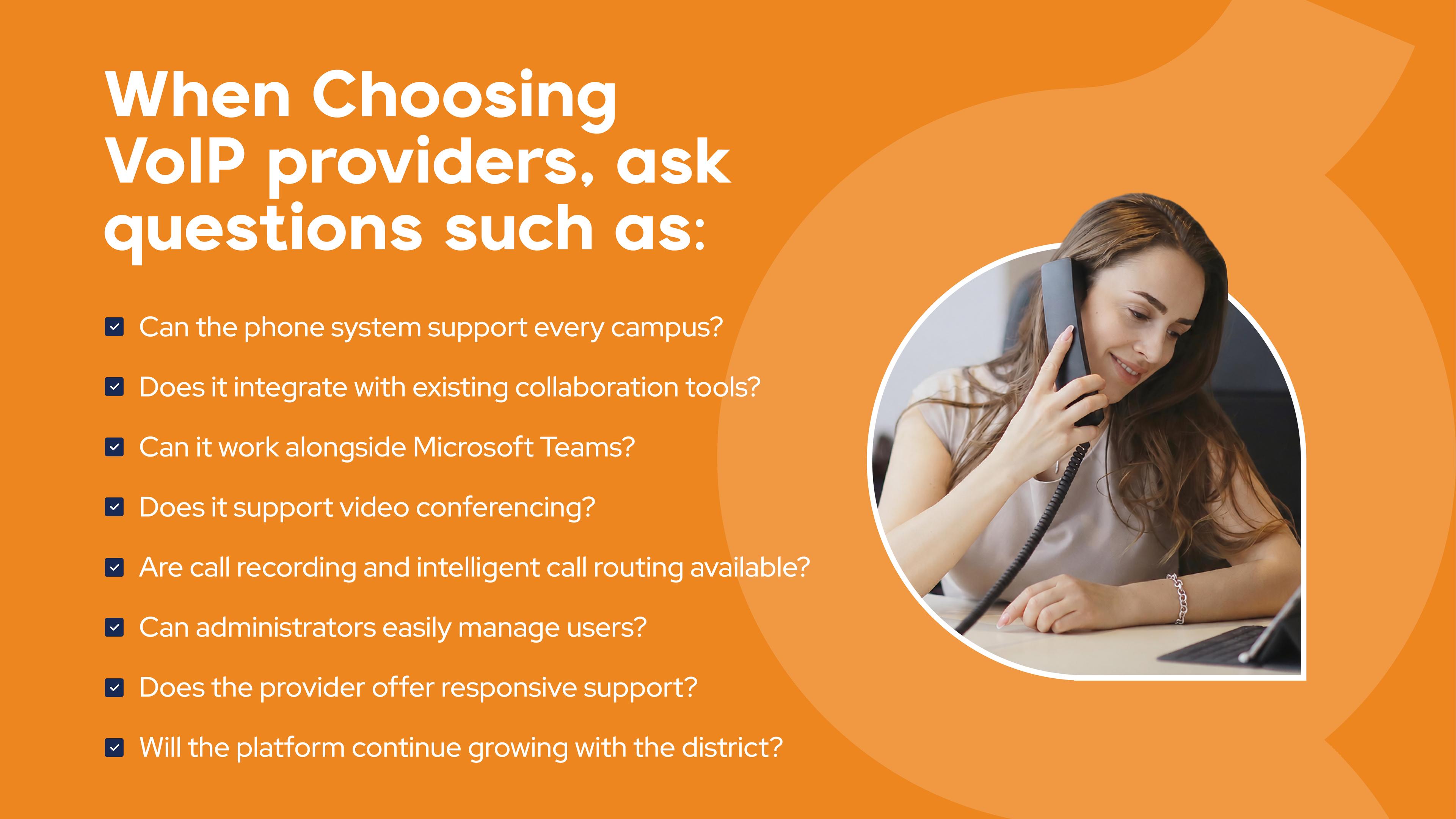
Ask questions such as:
- Can the phone system support every campus?
- Does it integrate with existing collaboration tools?
- Can it work alongside Microsoft Teams?
- Does it support video conferencing?
- Are call recording and intelligent call routing available?
- Can administrators easily manage users?
- Does the provider offer responsive support?
- Will the platform continue growing with the district?
The right VoIP solution should simplify operations rather than add complexity.
Frequently Asked Questions
What is a cloud phone system for schools?
A cloud phone system delivers phone service through the internet rather than relying on traditional phone lines or a traditional PBX. It gives school districts a modern communication platform that's easier to manage, scale, and support across multiple locations.
How does VoIP for schools improve communication?
VoIP for schools allows educators and administrators to communicate more effectively across multiple campuses, simplifies call routing, supports video conferencing, and makes it easier for authorized users to receive calls from approved devices.
Can cloud phone systems improve school safety?
Yes. Modern education phone systems can integrate with paging systems, provide precise location data, strengthen emergency response, and help schools improve safety while keeping students safe.
Can schools keep their existing phone numbers?
In most cases, yes. Many VoIP providers allow districts to retain existing numbers while upgrading to a modern phone system, minimizing disruption for staff and parents.
Modern Communications That Support Better Education

Reliable communication affects every aspect of school operations.
From helping parents reach the front office to enabling collaboration between teachers, administrators, transportation departments, and support teams, dependable communication from Gamut helps schools operate more efficiently every day.
A modern cloud phone system gives school districts the opportunity to replace aging legacy systems with flexible VoIP technology designed for today's educational environment. By combining dependable phone service, simplified management, advanced features, stronger reliability, secure access, intelligent routing, and scalable hosted VoIP services, districts can improve district communications without adding unnecessary complexity.
As more businesses embrace cloud communications, educational organizations are realizing those same advantages. Modern education phone systems help schools reduce maintenance costs, make better use of available resources, strengthen school communication, and create a connected learning environment that supports students today and adapts to tomorrow.
If your district is evaluating the future of its school phone, now is the ideal time to explore how cloud phone systems for schools, VoIP phone systems, and a modern cloud-based communication solution can help your schools connect, simplify operations, and provide exceptional service for students, teachers, parents, and every member of your school community.
Contact Gamut today to learn more and get started on your journey of modernization.
.jpg)
%20(1).jpg)

.jpg)
