If you’re still relying on a traditional phone system, we should talk, because there’s a good chance it’s starting to slow you down. Legacy PBX systems just weren’t built for remote teams, modern business operations, or the way companies manage customer interactions today.
That’s why more businesses are exploring cloud-hosted PBX systems as a smarter alternative. Which is. . .smart.
This guide breaks down the difference between a traditional PBX system and a hosted PBX phone system, so you can evaluate your phone system options and choose the right fit for your business.
What Are Cloud Hosted PBX Systems?
Cloud-hosted PBX systems are a type of business phone system that uses internet protocol instead of physical phone lines. Instead of housing equipment on premise, a hosted PBX provider manages everything in the cloud.
A hosted PBX system works by routing phone calls over an internet connection, allowing teams to stay connected from anywhere using desk phones, mobile devices, or computers.
This type of hosted PBX solution replaces the traditional private branch exchange with a virtual PBX system that’s easier to scale and manage.
In simple terms, a hosted PBX offers:
- Call routing and call forwarding for inbound calls and outbound calls
- Features like auto attendants, call recording, and caller ID
- Access to mobile apps for remote workers and remote teams
- Support for VoIP desk phones, IP phones, and softphones
Because everything runs through a hosted PBX service, businesses don’t need to maintain hardware or manage complex PBX systems internally.
What Is an On-Premises PBX?
A traditional PBX system, also known as an on-premises PBX, is installed at your physical location. This setup requires hardware, wiring, and ongoing maintenance.
With a traditional PBX, your team or service provider is responsible for:
- Managing PBX phone systems and PBX capabilities
- Maintaining hardware and handling hardware expenses
- Supporting phone lines, call management, and system upgrades
While traditional PBX systems give you control, they also require more time, cost, and IT involvement.
Cloud Hosted PBX Systems vs. On-Prem: Key Differences
When comparing on premise vs. cloud-based solutions, the biggest differences come down to flexibility, cost, and how your business communication evolves.
1. Cost and Cost Savings
Hosted PBX:
- Subscription-based hosted PBX service
- Lower upfront hardware expenses
- Predictable monthly phone service costs
Traditional PBX:
- Large upfront investment in PBX phone systems
- Ongoing maintenance and upgrade costs
- Higher long-term expenses
A hosted PBX phone system typically delivers more cost savings, especially for growing businesses.
2. Scalability and Growth
Hosted PBX:
- Easily add new users and phone numbers
- Scale without adding physical equipment
- Adjust quickly to changing call volumes
On-premise PBX:
- Limited by hardware capacity
- Scaling requires new equipment and installation
- Slower to adapt to growth
Cloud-based PBX systems are designed to grow with your business.
3. Flexibility for Remote Teams
Hosted PBX:
- Works anywhere with an internet connection
- Supports mobile devices and mobile apps
- Ideal for remote workers and distributed teams
Traditional PBX:
- Tied to a physical office
- Limited flexibility for remote teams
- Requires additional setup for remote access
A VoIP phone system allows teams to stay connected no matter where they work.
4. Features and Advanced Capabilities
Hosted PBX:
- Includes advanced features like call recording, advanced reporting, and auto attendants
- Supports conference calling, ring groups, and call routing
- Integrates with tools like Google Workspace and contact center platforms
Traditional PBX:
- Limited PBX features based on hardware
- Slower updates and fewer integrations
Modern hosted PBX offers more advanced features and better support for communication channels.
5. Maintenance and Management
Hosted PBX:
- Managed by your hosted PBX provider
- No need for in-house maintenance
- Faster updates and support
Traditional PBX:
- Requires internal IT or external service provider
- Manual updates and troubleshooting
- Higher operational burden
With a hosted PBX system, your service provider handles everything behind the scenes.
Key Benefits of a Hosted PBX Phone System
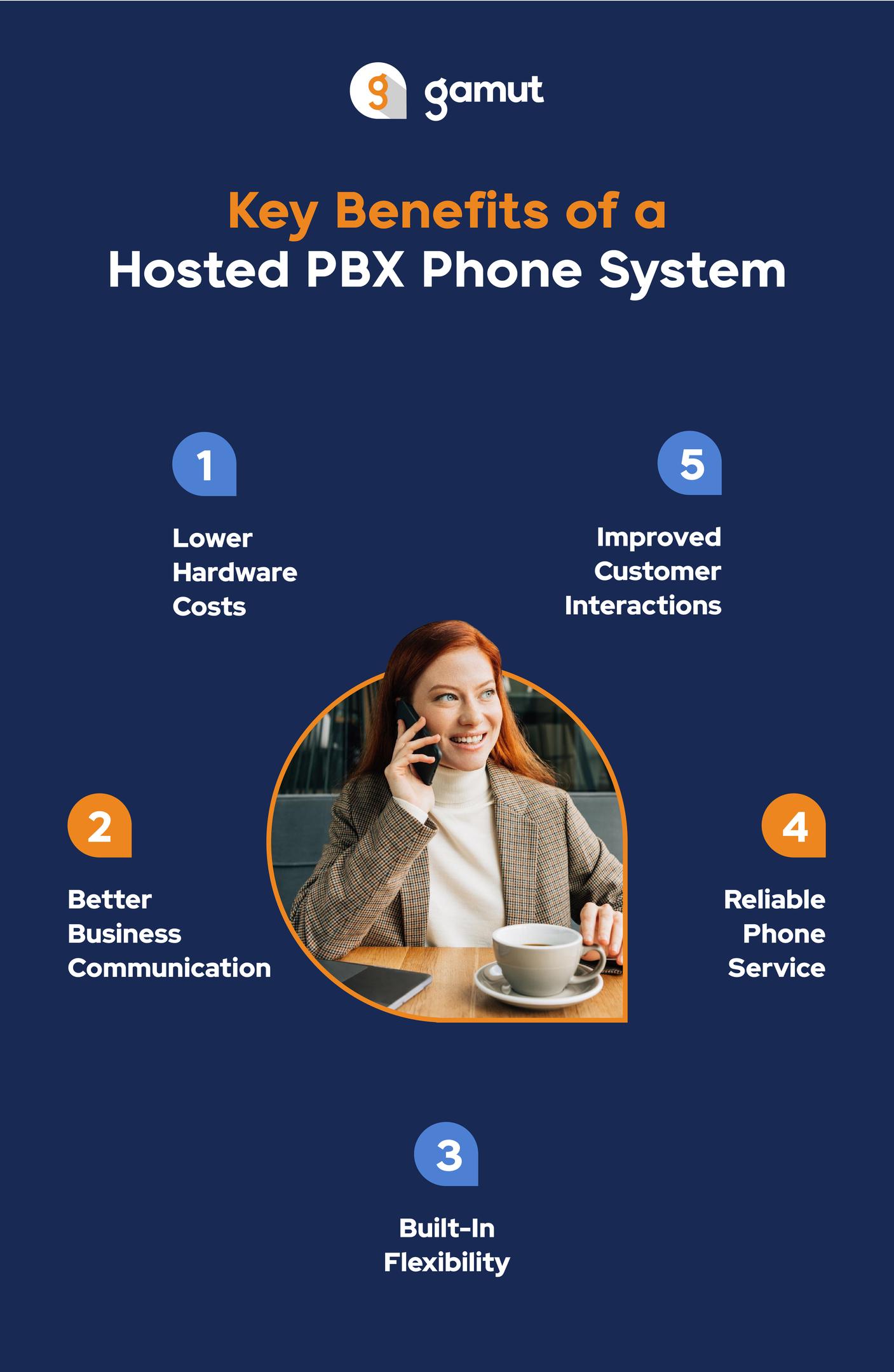
A hosted PBX phone system is built for how modern businesses operate.
Lower Hardware Costs
Because everything is cloud based, there’s no need for expensive on-premise equipment. This reduces hardware expenses and simplifies deployment.
Better Business Communication
A unified communications platform brings voice, messaging, and collaboration together, improving business communication across teams.
Built-In Flexibility
A hosted PBX solution supports mobile devices, remote teams, and virtual events, helping businesses adapt quickly.
Reliable Phone Service
With features like unlimited domestic calling, businesses can handle inbound and outbound calls without worrying about limits.
Improved Customer Interactions
Tools like call management, call routing, and call forwarding help route calls efficiently and improve customer interactions.
How Hosted PBX Works
Understanding how hosted PBX work helps clarify why businesses are making the switch.
A hosted PBX uses internet protocol (VoIP service) to transmit phone calls instead of traditional phone lines. This VoIP system connects users through a secure cloud environment managed by a hosted PBX provider.
That means:
- Phone calls are handled over the internet
- Teams can host video meetings and manage communication channels in one place
- Businesses can integrate their VoIP system with other tools
Many VoIP providers now offer hosted PBX services that include both basic features and advanced features in a single platform.
When an On-Premise PBX Might Make Sense
There are still cases where a traditional PBX or on-premises PBX is a fit.
- Businesses with strict compliance or control requirements
- Organizations with existing PBX systems they want to maintain
- Companies with dedicated IT teams
However, even these organizations are increasingly moving toward cloud-based or hybrid solutions.
Choosing the Right Hosted PBX Provider
Not all VoIP providers are the same. Choosing the right hosted PBX provider is critical.
Look for a hosted PBX provider that offers:
- A user friendly interface
- Strong PBX capabilities and PBX features
- Reliable phone service and support
- Integration with your existing tools
The right hosted PBX provider will ensure your system supports your business operations today and into the future.
Why Businesses Are Moving to Hosted PBX
Businesses are moving away from legacy PBX systems and traditional PBX setups because they need more flexibility.
Cloud-based solutions allow teams to:
- Stay connected across locations
- Support remote teams and remote workers
- Manage call volumes more efficiently
- Improve communication channels and customer interactions
A hosted PBX phone system makes it easier to adapt without adding complexity.
Simplify Your Phone System with Gamut
At Gamut, we help businesses modernize their phone system with flexible, cloud-based solutions.
Our unified communications platform combines voice, messaging, and collaboration into one system, so your team can stay connected and manage communication from anywhere.
Whether you’re replacing a traditional PBX system or evaluating a new hosted PBX solution, we’ll help you find the right fit.
Ready to Upgrade Your Business Phone System?

If you’re comparing business phone system hosted PBX systems, the right choice comes down to flexibility, scalability, and simplicity.
A hosted business phone system offers the tools modern businesses need to stay connected, improve customer interactions, and support long-term growth.
Ready to explore your options? Contact our team to get started.
%20(1).jpg)
.jpg)