Phones should not be the most fragile thing in the building. Yet, in many New England offices, the phone system is still treated like a basement appliance: installed years ago, rarely touched, and only discussed when something breaks at the worst possible time.
A cloud PBX phone system sets you free.
Instead of anchoring your calling to a box on-site, a business cloud PBX runs in the cloud, so calls follow your team, your locations, and your schedule (including the random “we’re closed because the roads are a skating rink” days).
If a phone upgrade is on the table, here are five business reasons to move from a traditional PBX to a cloud business phone system, with a few New England realities baked in.
Quick Refresher: What is a Cloud PBX Phone System?
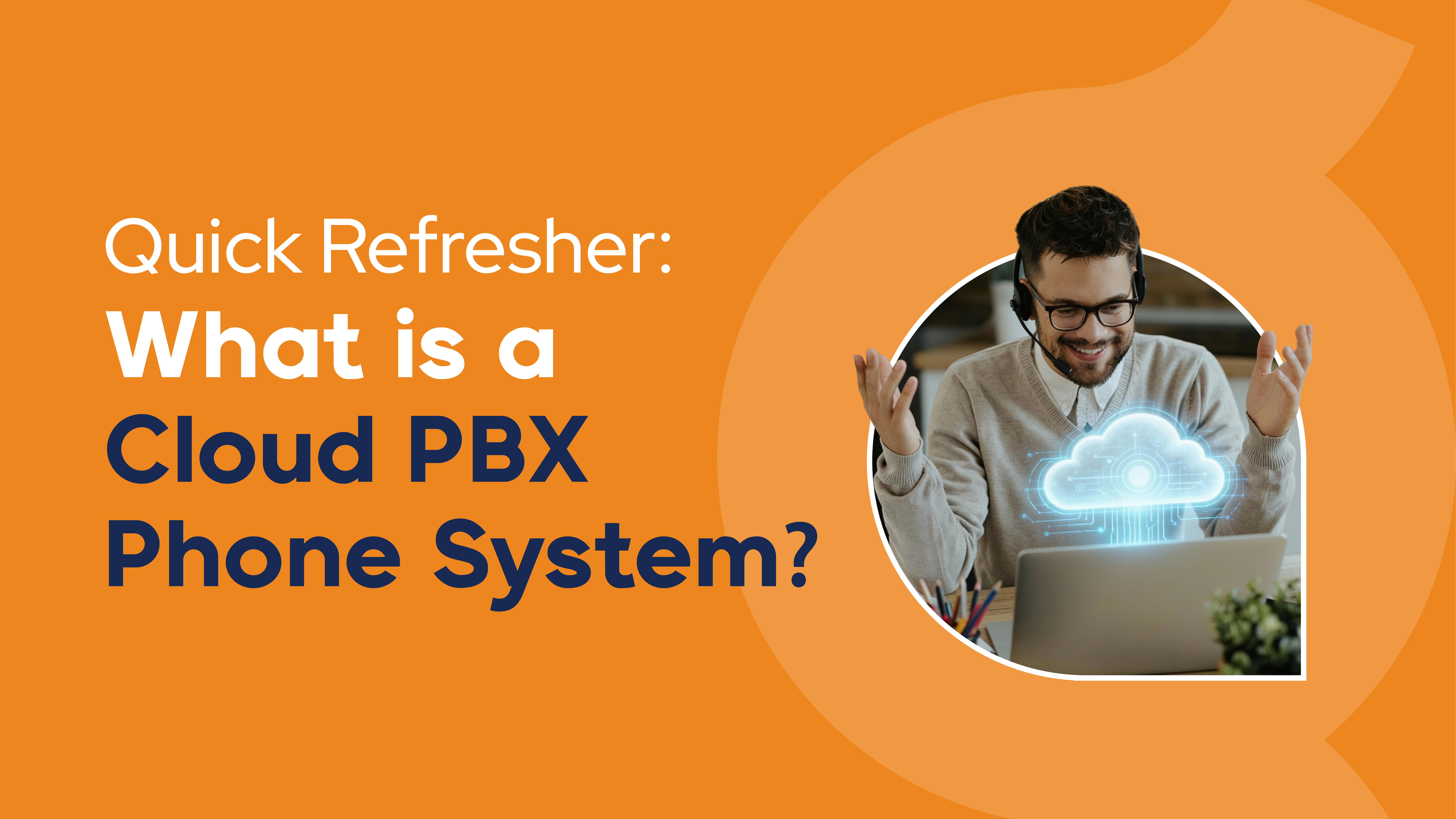
We'll start with what you know. A traditional PBX (Private Branch Exchange) lives on-site. It connects your phones, routes internal phone calls, and ties into phone lines. Changes usually involve a vendor visit, a service ticket, or that one person who “knows how to program it.”
A cloud PBX phone system does the same job, but the "brains" of the phone systems live in the cloud, not a physical closet. Using Voice over Internet Protocol (VoIP) technology, your team can access the system from a variety of internet-connected devices, including desk phones, softphones, and mobile apps.
For your admin team, they can handle all system adjustments through a simple portal rather than a specialized console.
You will also hear it called:
- Hosted phone system
- VoIP cloud phone solution
- Cloud telephony or business cloud PBX
- Sometimes they're even called a unified communications platform (because ones from Gamut are just that powerful).
Whatever you want to call it, they're all the same idea: move your business communication to a cloud-based software platform so it can adapt easily as the business changes.
5 Reasons You Should Switch from Traditional to Virtual PBX
Now that you know what a VoIP phone system is (and what it typically looks like), here's why they're a great investment for your business both now and in the future.
1) It ensures you won't lose business every time the building goes down
New England weather doesn’t care about your phone bill. Nor’easters, ice storms, and the occasional squirrel-with-a-death-wish take down power and internet like clockwork.
If your phone system is still physically tied to your office, that means when the building goes dark, your phone lines do too. So, for every missed call, there’s a customer you may not get back.
A cloud PBX phone system changes that completely.
It’s hosted in secure, backed-up data centers that stay online even if your building goes dark. Since your phone number lives in the cloud now, not on a box in the back closet, calls can follow your team wherever they are.
You can:
- Route phone and video calls to mobile apps or laptops so staff can answer from home
- Automatically forward incoming calls to another office or answering service
- Pre-set call routing rules, so you’re ready before something breaks
- Add LTE backup or “disaster mode” to stay live if your main internet goes down
The result? Even if your office is closed, your phones are open. Customers get answers, your team keeps working, and you don’t lose business to New England weather.
2) It makes 911 compliance easier and more accurate
Let’s talk about something most people avoid until it’s too late: emergency calling.
Federal law now requires all multi-line phone systems (which include pretty much every office with more than one phone) to provide:
- Direct 911 access (no prefix required)
- A dispatchable location (not just “123 Main St” but “2nd floor, breakroom”)
These rules (Kari’s Law and RAY BAUM’s Act) exist for a reason: they save lives. However, most traditional PBX systems don’t track location information beyond the front door, especially if phones have been moved around over time.
A business cloud PBX system fixes that. You can tag every phone, softphone, or user with a precise location (by room, floor, or department) and update it as people move. Some systems even detect those changes automatically.
It’s not just compliance. It’s clarity. When you’re responsible for your team’s safety, it’s worth knowing your phones won’t leave first responders guessing.
3) It supports hybrid work, whether it's permanent or temporary.
Look, even if the official policy is “everyone in the office,” people are still working from home, from the road, or from some quiet corner of a Dunkin’.
Your phone system should be able to support that, not fight it.
A cloud PBX phone system lets your staff use the same number, extension, and call tools no matter where they are. It keeps everyone connected without juggling call forwarding rules or handing out personal cell numbers like candy.
That means:
- Sales doesn’t miss leads just because they’re on the road
- Admins can juggle calls and tasks without being glued to a desk
- Managers see call logs, voicemails, and team status all in one place
This isn’t a “maybe one day” future. It’s the current expectation. Your staff expects flexibility. Your customers expect fast answers. A VoIP phone system helps you deliver both.
4) It simplifies your costs and makes them predictable.
Old-school phone systems might seem cheaper. . .until something breaks.
You get stuck paying for hardware support, emergency service calls, replacement parts that don’t exist anymore, or capacity upgrades that cost more than your copier. Oh, and you still have to wait three weeks for the “phone guy” to come by.
With a hosted phone system, that all goes away. You'll have cost savings with:
- Predictable monthly costs
- Less hardware to maintain
- Remote support without a truck roll
- Easy user adds/moves/changes you can handle yourself
The best part? You scale up or down as needed. Busy season coming up? Add some users. Downsizing a location? Remove them. No overbuying, no underbuilding, no waiting.
5) It improves the customer experience (without giving your team more to juggle)
Your phone system isn’t just for internal calls. It’s often someone's first impression of your business. If that experience is clunky (with confusing menus, outdated hours, or dead ends), that reflects badly on your business, even if it’s the system’s fault.
And the people calling? Seventy-six percent of them will not call back again. A VoIP cloud phone system gives you better tools to make that first impression a good one:
- Menus that reflect your actual staff structure (and yes, we can make them bilingual)
- Ring groups so calls don’t hinge on one person being at their desk
- Shared voicemails, transcribed messages, and queues with callback options
- Live reporting so you can fix problems before they become patterns
Also, here’s the part most systems don’t get right: it’s easy to manage. You don’t need to submit a ticket just to change your hours or reassign a line. You can make updates in minutes without an advanced IT degree.
The end result? Customers feel heard, your team stays organized with essential features, and you stop losing time (and business) to avoidable phone headaches.
Want to improve your CX even further? Check out the benefits of investing in an omnichannel contact center solution.
5 Common Cloud PBX Concerns (and Their Answers)
If you read through this and still have questions, we've got you. Here are the most frequently asked ones and our answers. Enjoy!
Q1: Is call quality worse with cloud PBX?
Not if your internet is solid. Cloud PBX uses your network, so as long as there’s enough speed and not a lot of delay, voice calls will sound just as clear, and sometimes even better, than old landlines.
Q2: Is a cloud PBX system actually reliable?
Yes and often more reliable than your old system. Cloud PBX can keep calls working even if your office loses power or internet, because calls can go to mobile phones or other locations automatically.
Q3: Will switching be a huge hassle?
Not if it's done right. Like anything else, results depend on the rollout. Here’s what a solid transition plan looks like (and yes, it’s how we do it at Gamut):
- Map your existing setup. We're talking every line, every phone, every need.
- Design once, deploy everywhere. Standardize your call flows, paging, and backup options before launching.
- Stage the cutover. Launch a pilot location first and keep legacy lines live until that location verifies everything works. Then move on to the next location.
- Train by role with short, useful sessions that include actual how-to guides on using the more advanced features of your small businesses' phone system.
- Take advantage of your vendor's ongoing support, one number to call, no finger-pointing.
Not sure if the vendors you're considering provide that kind of support? Give Gamut a call.
Q4: Is cloud PBX secure?
It can be very secure, as long as it's set up correctly. That means strong passwords, user controls, and call traffic that's protected from hackers. Be sure to ask your provider about encryption protocols when you talk to them.
Q5: Can we keep our current numbers?
Yes. Your existing business phone numbers can be ported over to a cloud PBX system. Most providers handle the transfer for you! All you have to do is make sure you don’t cancel your old service until the port is complete. Then you can enjoy unlimited domestic calling and international calling thanks to your cloud PBX provider.

Long Story Short? Cloud Hosted PBX Is Worth the Investment
Whether you're running a small office in Cambridge or overseeing a multi-site operation across New England, the phone system shouldn’t be a liability. A cloud PBX phone system from Gamut:
- Keeps you online when your building isn’t
- Helps you meet 911 laws without guesswork
- Supports remote and hybrid work with no friction
- Cuts telecom costs and headaches
- Gets callers to the right human, fast
If you're ready for a change, take a look at Gamut’s cloud PBX phone system offerings. We’re local, practical, and not afraid of the phrase “site walk.”
Let's build a phone system for you that you'll actually enjoy using. Reach out to our team to get started.

.jpg)
.jpg)
%20(1).jpg)